
Best practices for mental health focus on daily habits that support emotional balance and resilience. These include regular exercise, healthy sleep, balanced nutrition, stress management, and strong social connections. Mindfulness, setting boundaries, and seeking professional help when needed can improve mood, focus, and overall well-being over time for people of all ages and lifestyles.
Self Care Tips for Mental Wellness
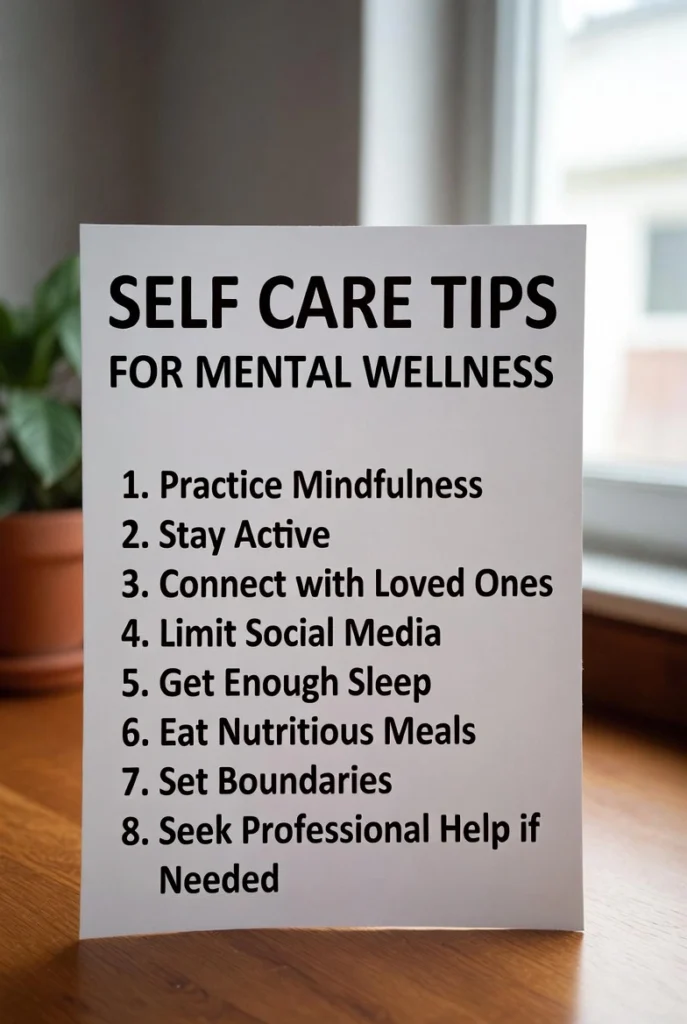
Self-care for mental wellness means taking small daily steps to protect your mind and emotions. Simple habits like meditation, healthy food, home activities, and a calm environment help reduce stress and improve focus. Practicing self-care at home builds emotional strength, boosts mood, and supports long-term mental wellness naturally.
Daily Self-Care Practices to Improve Mental Health at Home
| Area | Self-Care Tips | How It Helps Mental Health |
| Home Environment | Keep rooms clean, open windows, add plants | Reduces stress and improves mood |
| Daily Routine | Fixed sleep and wake time | Improves emotional balance |
| Home Activities | Reading, music, journaling, art | Calms the mind and reduces anxiety |
| Social Connection | Talk with family, limit isolation | Prevents loneliness |
| Screen Control | Reduce phone use before sleep | Improves sleep quality |
| Physical Movement | Stretching, walking at home | Releases stress hormones |
Meditation Practice
| Practice | How Many Times | Duration | Benefits |
| Morning Meditation | 1 time daily | 10–15 minutes | Improves focus and positivity |
| Breathing Exercise | 2 times daily | 5 minutes | Reduces anxiety |
| Night Mindfulness | 1 time daily | 10 minutes | Better sleep and a calm mind |
7-Day Mental Wellness Practice Chart
| Day | Practice Focus | Activity |
| Day 1 | Mind Awareness | 10 min meditation + journaling |
| Day 2 | Physical Health | Light exercise + stretching |
| Day 3 | Emotional Care | Talk with family + music |
| Day 4 | Mental Calm | Breathing exercise + reading |
| Day 5 | Environment | Clean room + plants |
| Day 6 | Self Reflection | Gratitude writing |
| Day 7 | Rest & Reset | Digital detox + early sleep |
Foods That Support Mental Health
| Food Name | Amount | How Often | Mental Health Benefits |
| Bananas | 1 medium | Daily | Improves mood |
| Nuts (Almonds/Walnuts) | 5–6 pieces | Daily | Reduces stress |
| Dark Chocolate | 1 small piece | 3 times/week | Boosts happiness |
| Yogurt | 1 bowl | Daily | Supports gut–brain health |
| Leafy Greens | 1 cup | Daily | Reduces anxiety |
| Fish | 1 serving | 2 times/week | Improves brain function |
Foods That Support Mental Wellness
| Food Name | Amount | How Often | Mental Wellness Benefits |
| Bananas | 1 medium | Daily | Improves mood |
| Nuts (Almonds/Walnuts) | 5–6 pieces | Daily | Reduces stress |
| Dark Chocolate | 1 small piece | 3 times/week | Boosts happiness |
| Yogurt | 1 bowl | Daily | Supports gut–brain health |
| Leafy Greens | 1 cup | Daily | Reduces anxiety |
| Fish | 1 serving | 2 times/week | Improves brain function |
Positive Mental Health Habits
Positive mental health habits are daily actions that help you stay calm, confident, and emotionally balanced. These habits improve how you think, feel, and handle stress. Mental health outcomes depend heavily on healthcare systems that are accessible, well-funded, and designed to integrate psychological care alongside physical treatment.
Making positive routines like mindfulness, healthy living, and significant activities supports long-term mental wellness, bring happiness, and helps prevent emotional burnout in everyday life.
Positive Mental Health Symptoms
| Positive Symptoms | What They Mean |
| Emotional balance | You manage feelings without feeling overwhelmed |
| Positive thinking | You focus more on solutions than problems |
| Good sleep | You feel rested and energized |
| Self-confidence | You believe in your abilities |
| Calm mindset | You handle stress better |
| Healthy relationships | You connect well with others |
Activities That Bring Happiness in Daily Life
| Activity | How Often | Happiness Benefit |
| Morning walk | Daily | Boosts mood and clarity |
| Listening to music | Daily | Reduces stress |
| Reading | 3–4 times/week | Improves mental calm |
| Creative hobbies | Weekly | Increases joy and focus |
| Helping others | Weekly | Builds self-worth |
| Relaxation time | Daily | Prevents burnout |
Workplace Stress Management
Workplace stress management focuses on healthy ways to stay calm, focused, and productive at work. Simple habits like time planning, short breaks, and clear communication help reduce pressure. Managing stress at the workplace improves mental health, job satisfaction, and overall well-being for employees of all ages.
How to Control Stress in the Workplace
| Stress Cause | Practical Solution | Benefit |
| Heavy workload | Break tasks into small steps | Reduces mental pressure |
| Time pressure | Plan daily priorities | Improves focus |
| Long screen time | Take short breaks every hour | Relaxes the mind |
| Poor communication | Speak clearly with teammates | Lowers confusion |
| Work-life imbalance | Set work boundaries | Protects mental health |
Habits That Relax the Mind at Work
| Habit | How Often | Benefit |
| Deep breathing | 2–3 times daily | Calms anxiety |
| Short walk | Once daily | Refreshes the brain |
| Positive self-talk | Daily | Builds confidence |
| Stretching | Every 2 hours | Releases tension |
| Listening to soft music | During breaks | Improves mood |
Improving Mental Health by Visiting a Psychiatrist (USA)
Seeing a psychiatrist helps diagnose, treat, and manage mental health conditions like stress, anxiety, and depression. Treatment may include counseling, therapy, lifestyle guidance, and medication if needed.
Trusted Mental Health Resources (USA)
| Service | Contact Details | Purpose |
| 988 Suicide & Crisis Lifeline | Phone: 988
Website: 988lifeline.org |
24/7 mental health support |
| Psychology Today Directory | Website: psychologytoday.com | Find psychiatrists near you |
| SAMHSA Helpline | Phone: 1-800-662-4357
Website: samhsa.gov |
Mental health treatment help |
How to take an appointment:
Visit the website → choose location → select a psychiatrist → book online or call directly.
Why Teens Are Affected by Mental Health Issues Today
- Academic pressure and career stress
- Excessive social media use
- Lack of sleep
- Fear of comparison and online judgment
- Limited emotional support
How Teens Can Recover
- Talk openly with parents or teachers
- Limit screen and social media time
- Practice self-care and hobbies
- Visit a mental wellness professional early
- Build strong real-life friendships
Does Social Media Affect Mental Health?
Social media can both help and harm mental health. Positive content and support groups help people feel connected, while overuse, comparison, and cyberbullying can increase stress and anxiety.
Healthy use tips:
- Limit daily screen time
- Avoid negative content
- Follow positive and educational pages
Mental Health Safety Plan
| Step | Action |
| Warning signs | Notice stress, sadness, or burnout |
| Coping skills | Breathing, walking, journaling |
| Safe people | Contact friends or family |
| Professional help | Call psychiatrist or helpline |
| Emergency support | Call 988 for immediate help |
Role of Friends and Family in Mental Health Support
| Support Type | How They Help |
| Emotional support | Listening without judgment |
| Motivation | Encouraging healthy habits |
| Social connection | Reducing loneliness |
| Crisis help | Guiding to professional care |
| Daily care | Creating a positive environment |